𝐋𝐚𝐥𝐢𝐛𝐞𝐥𝐚 🇪🇹⛪ — Ethiopia’s Living Miracle with Zemen Travel
📜 Full History of Lalibela
Lalibela is one of the world’s most extraordinary historical sites — a place where faith, architecture, and mystery meet.
Located in northern Ethiopia, the city stands at 2,500 meters above sea level and holds some of the holiest churches of the Ethiopian Orthodox Tewahedo Church.
With Zemen Travel, you can explore Lalibela through expertly planned tours that bring its rich history, spiritual significance, and breathtaking architecture to life.
🌟 Origins & Vision
Between 1181 and 1221, Ethiopia was ruled by King Lalibela of the Zagwe Dynasty.
During his youth, legend says bees surrounded him as a baby, and wise men interpreted it as a sign of his future greatness. His name “Lalibela” means “the bees recognize his sovereignty.”
After becoming king, he traveled to Jerusalem — or according to some traditions, had a divine vision of Jerusalem. When he returned, he decided to create a “New Jerusalem” in Ethiopia, a holy city that Ethiopian Christians could visit without crossing dangerous lands.
This divine mission became the foundation for the rock-hewn churches of Lalibela.
⛏️ How the Churches Were Carved
The construction method is one of the greatest miracles in architectural history:
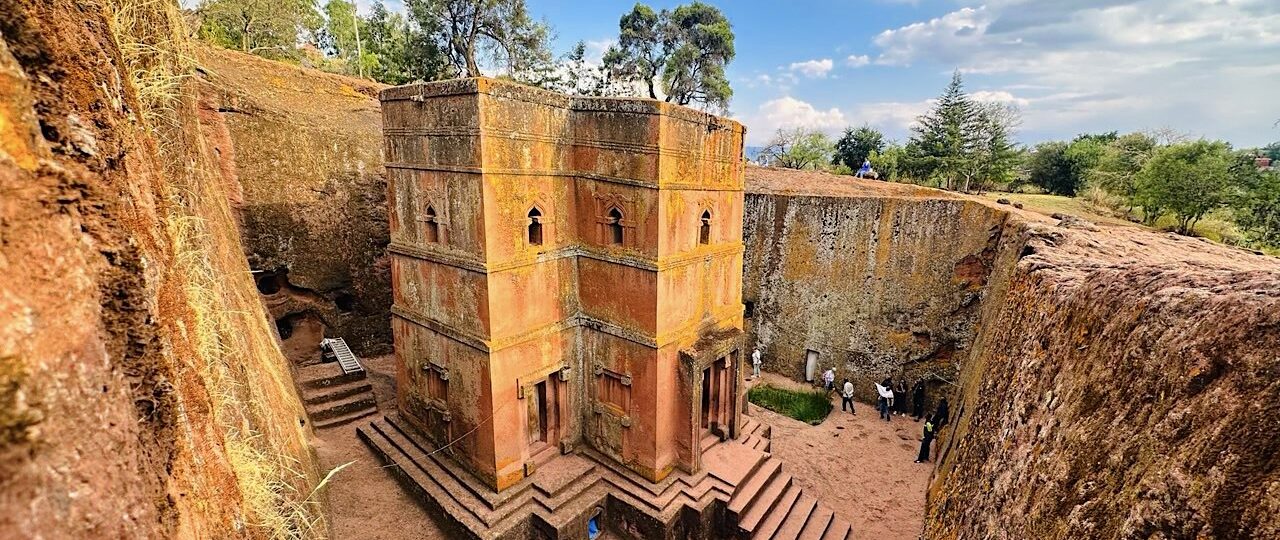
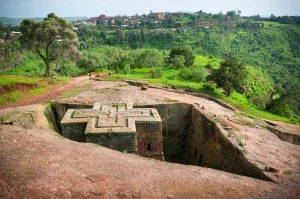
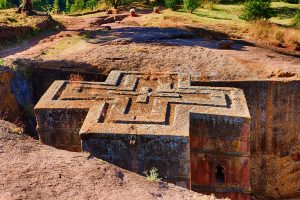
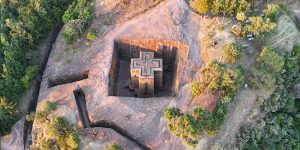
They were carved downward, not built upward.
Workers began on top of a massive volcanic rock and carved straight down, removing thousands of tons of stone.
Then they chiseled out:
-
Doors
-
Windows
-
Domes
-
Pillars
-
Altars
-
Tunnels
-
Drainage systems
All from a single piece of bedrock — without removing the church from the earth.
No imported stones.
No mortar.
No wood structure.
Everything is one solid rock.
😇 Divine Assistance Legend
Local tradition says:
This is why the entire complex was completed incredibly fast — estimated to be just 24 years, something modern engineers still struggle to explain.
🛕 The 11 Rock-Hewn Churches
The churches are divided into three groups, symbolizing parts of the Holy Land.
 The Northern Group
 The Eastern Group
-
Bete Amanuel
-
Bete Abba Libanos
-
Bete Merkorios
-
Bete Gabriel-Rufael
 The Western Group
🔗 Hidden Tunnels & Symbolism
The churches are connected by:
Some tunnels represent the journey of Christ, others represent the path from sin to salvation.
Holy water, crosses, ancient manuscripts, and priests living in the caves continue to preserve the centuries-old traditions.
🕯️ Lalibela Today
Lalibela is not a museum — it is a living spiritual city.
Every day, pilgrims pray inside the rock churches.
Priests chant ancient Ge’ez hymns.
Chants echo through the tunnels, just as they did 800 years ago.
The churches were declared a UNESCO World Heritage Site in 1978, one of the first in Africa.
Millions of visitors, historians, and pilgrims continue to travel each year.
✨ Why Lalibela Is a World Wonder


 Carved from a single rock